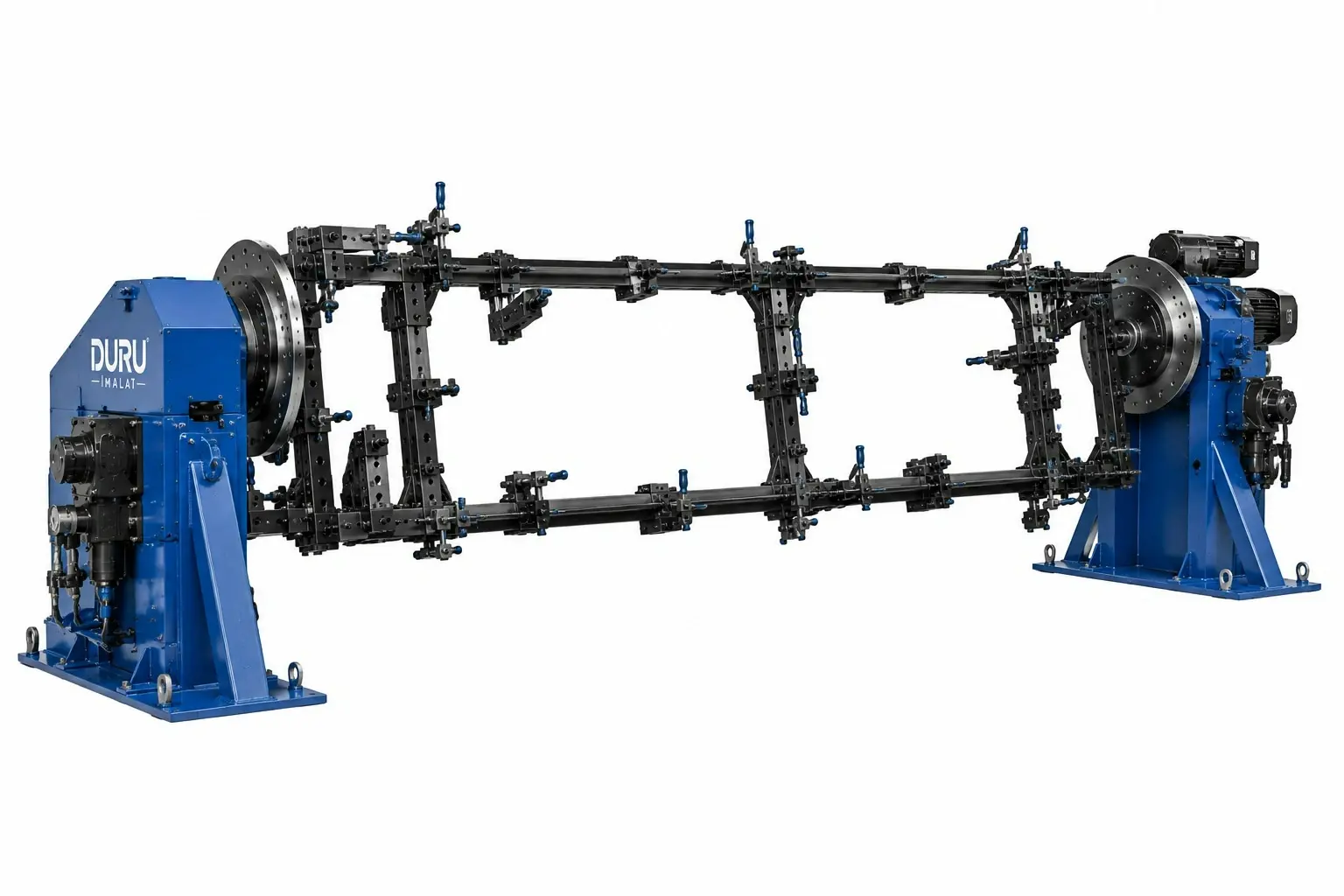
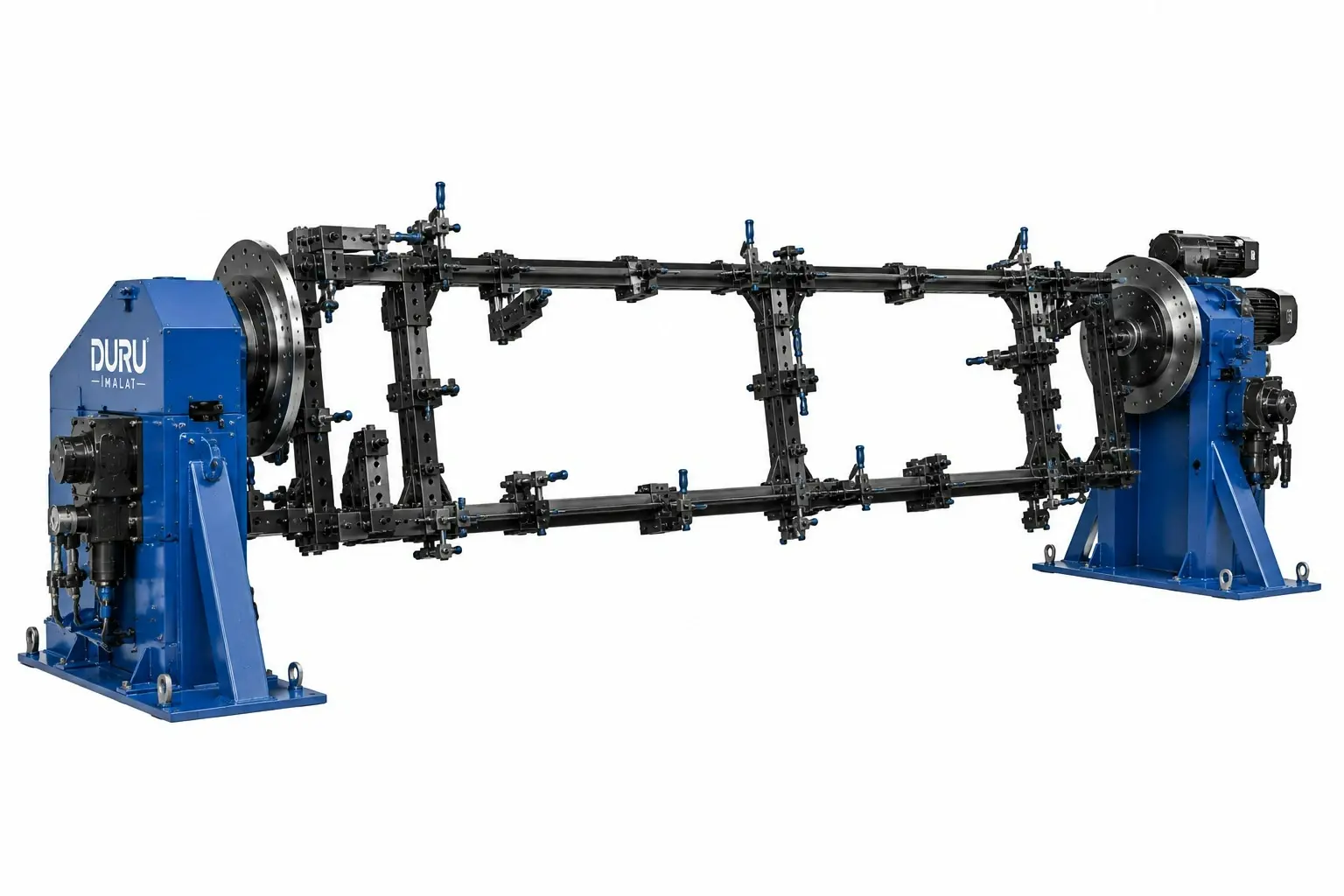
A positioning fixture is a fixture system that secures workpieces in a specific position during manufacturing or assembly while also automatically or controllably moving them to the desired angle or position. It is especially used in welding, assembly, CNC machining, measurement, and robotic applications.
In Brief
- Fixture → Holds the part securely in place.
- Positioner → Rotates, tilts, or moves the part to specific angles.
- Positioning Fixture → Combines both functions in a single system.
Main Purposes
- Keeping the part in the correct position
- Reducing operator errors
- Providing repeatable precision
- Increasing production speed
- Improving access for welding or machining operations
Areas of Use
- Automotive manufacturing
- Welding robots
- CNC machines
- Aerospace industry
- Mass production assembly lines
Working Principle
The system generally consists of:
- Vise / clamping mechanism
- Rotary table
- Servo motor or pneumatic system
- Sensors and control unit
For example, in a welding application, the workpiece is fixed to the fixture, and the positioner rotates it to 90°, 180°, or any required angle. This allows the welder or robot to easily access every section of the part.
Advantages
- Higher production quality
- Faster cycle times
- Improved workplace safety
- Reduced scrap and part defects
- Compatibility with robotic automation